What Is Sticker Price? How It Differs from MSRP

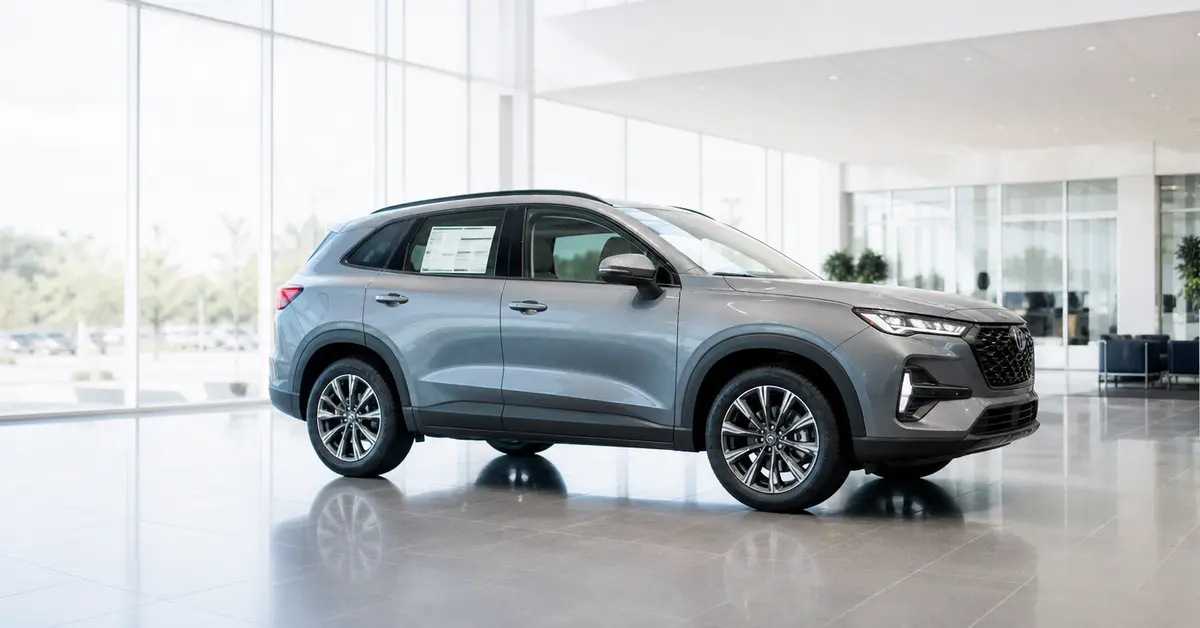
The sticker price and MSRP are often confused, but they are not the same. The MSRP (Manufacturer’s Suggested Retail Price) is the base price set by the manufacturer, while the sticker price is the final price displayed on the vehicle window, which includes the MSRP, destination fees, and dealer-added markups. Understanding the difference is the first step in successful car negotiation.
What Is Sticker Price? (Simple Definition)
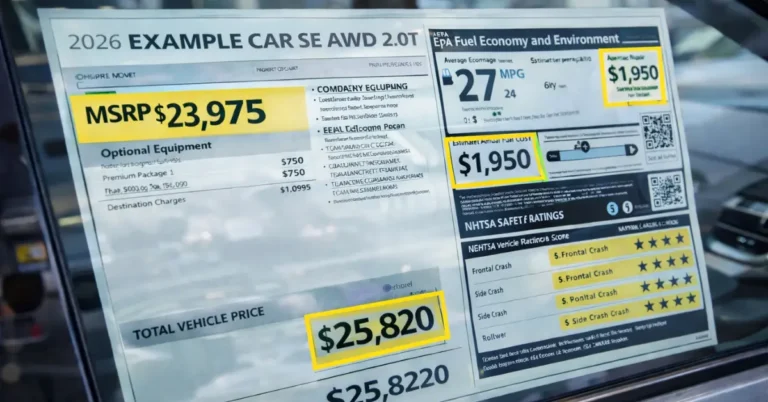
Sticker price is the total price displayed on a vehicle’s window sticker at the dealership. It includes the base MSRP set by the manufacturer, plus any destination charge and dealer-added items.
The sticker price comes from two sources:
- The Monroney sticker (the official manufacturer sticker required by federal law)
- The addendum sticker (an extra sticker the dealer adds to show their own charges)
Read more about: How to Read a Car’s Window Sticker
What Is MSRP? (Quick Recap)
The MSRP (Manufacturer’s Suggested Retail Price) is the base price set by car makers like Ford, Honda, or Toyota. This figure includes the cost of the vehicle itself along with any factory-installed packages or trim upgrades.
The most important part of this term is “suggested.” Under the Automobile Information Disclosure Act of 1958, manufacturers are required to post this price on every new vehicle, but dealers are not legally bound to sell it at that number. Understanding the msrp meaning is essential because it serves as your starting point for negotiations, not a fixed price you are forced to pay.
Sticker Price vs MSRP: What Is the Real Difference?
MSRP = what the manufacturer suggests.
Sticker price = what the dealer actually shows you, which can be higher.
|
Factor |
MSRP (Manufacturer’s Suggested Retail Price) |
Sticker Price (Total on Window) |
|---|---|---|
|
Who Sets It |
The car manufacturer (e.g., Ford, Honda, Toyota) |
The dealership — based on MSRP plus add-ons |
|
What It Includes |
Base price + factory-installed options + packages |
MSRP + destination charge + dealer add-ons + accessories |
|
Is It Negotiable? |
Yes — MSRP is a “suggestion,” not a fixed price |
Yes — especially the dealer-added items |
|
Legal Requirement? |
Yes — required by the Monroney Act (1958) |
Addendum sticker is not legally required |
|
Where You See It |
Top section of the window sticker |
Total at bottom of window + any addendum sticker |
|
Typical Price Gap |
Base reference price |
Can be $500–$5,000+ above MSRP at some dealers |
Why Is the Sticker Price Higher Than MSRP?
Dealers add items and fees on top of the MSRP to increase their profit margin. The biggest additions are:
- Destination & Delivery Charge — the cost to ship the car from the factory to the dealership (typically $1,000–$2,000 depending on the brand and distance)
- Dealer-Installed Accessories — floor mats, wheel locks, paint protection, or appearance packages that the dealer adds
- Documentation Fee (“doc fee”) — a paperwork fee that varies by state ($50–$800)
- Market Adjustment — an extra fee dealers add on high-demand vehicles, sometimes thousands above MSRP
Should You Pay Sticker Price?
Short answer: No. The sticker price is a starting point, not a final offer. According to Edmunds’ annual car buyer data, the average new car in 2024 sold for 1.2% below sticker price — and in slower market segments, buyers routinely negotiate 3–8% off.
However, there are some situations where sticker price (or even above sticker price) happens:
- A newly released model with limited inventory (e.g., first year of a redesigned model)
- A vehicle with known high demand, like the Kia Telluride, which famously sold above MSRP for years
- A hard-to-find trim level or color combination
In those cases, dealers have leverage. In normal inventory conditions, you have leverage. Know which situation you are in before you negotiate.
What Does the Sticker Price Include vs What MSRP Includes?
What MSRP Covers
- Base vehicle price (engine, transmission, standard features)
- Factory-installed option packages (sunroof, premium audio, safety tech bundles)
- Trim level upgrades (Sport, Limited, Platinum — each has its own MSRP)
- Does NOT include destination charge
- Does NOT include taxes or government fees
What Sticker Price Adds on Top of MSRP
- Destination & Delivery (mandatory — all cars have this; avg. $1,095–$1,795 in 2025)
- Dealer-installed accessories (optional — but listed as if mandatory)
- Market Adjustment / ADM (additional dealer markup — especially on hot models)
- Extended warranty or protection packages (these are always optional)
Dealer Add-Ons: What to Accept and What to Refuse
This table gives you a quick guide on which dealer add-ons on the sticker price are worth it and which ones you should decline or negotiate away.
|
Dealer Add-On |
Should You Pay It? |
|---|---|
|
All-Weather Floor Mats |
Maybe — you can often buy them cheaper from the manufacturer website |
|
Paint Protection Film (PPF) |
No — dealer pricing is usually much higher than third-party shops |
|
VIN Etching / Anti-Theft Sticker |
No — low-cost DIY kits work similarly |
|
Nitrogen Tire Inflation |
No — regular compressed air works just fine |
|
Fabric/Leather Protection Spray |
No — similar products are available at auto stores for much less |
|
Wheel Locks |
Maybe — compare online prices before buying from the dealer |
|
First Oil Change Package |
Usually skip it — many new cars already include free maintenance |
Pro tip: When a dealer presents you with a sticker that has add-ons, ask them to remove any item you did not specifically request. Many buyers don’t realize these items are optional.
How to Use Sticker Price in Car Negotiation

Smart buyers use the sticker price as a reference point, not a target. Here is the simple framework:
- Find the MSRP first — check the manufacturer’s website for the exact trim and options you want.
- Look up the invoice price on Edmunds or Consumer Reports — this is what the dealer paid. It is usually 3–8% below MSRP.
- Compare the sticker price to the MSRP — identify every added item and decide which ones you accept.
- Negotiate toward invoice price, not MSRP — that is where real savings come from.
- Always ask for the “out-the-door” price — this includes taxes, fees, and registration, so you see the total.
Sticker Price vs Asking Price: Are They Different?
People often use these terms interchangeably — but they mean different things:
- Sticker Price — the price printed on the car’s window sticker at the dealership
- Asking Price — what a dealer or private seller says they want for the vehicle (can be verbal or written in an ad)
- Sale Price / Transaction Price — the final agreed amount you actually pay
On a new car, the sticker price and the asking price are usually the same number. On a used car, the asking price is what the seller lists online or at the lot — there is no sticker requirement on used vehicles.
Key Stats and Facts About Sticker Price
- The average new car transaction price in 2024 was $48,623 (source: Kelley Blue Book)
- The average buyer paid about $600 below sticker price in 2024 — much less than the 2021 peak when buyers paid an average of $728 ABOVE sticker (source: Edmunds)
- Destination charges ranged from $995 (some Chevys) to $1,795 (some trucks) in 2025 model year vehicles
- Dealer documentation fees average $408 nationally, but range from $50 to $799 depending on the state (source: Edmunds Fee Analysis)
- About 82% of new cars sold in Q4 2024 sold at or below sticker price — marking a return to pre-chip-shortage norms (source: Edmunds Market Report)
FAQs
Conclusion
Sticker price and MSRP are related but not the same. The MSRP is the manufacturer’s starting point. The sticker price is what the dealer wants. Between these two numbers — and below the sticker price — is where the best car deals are made.