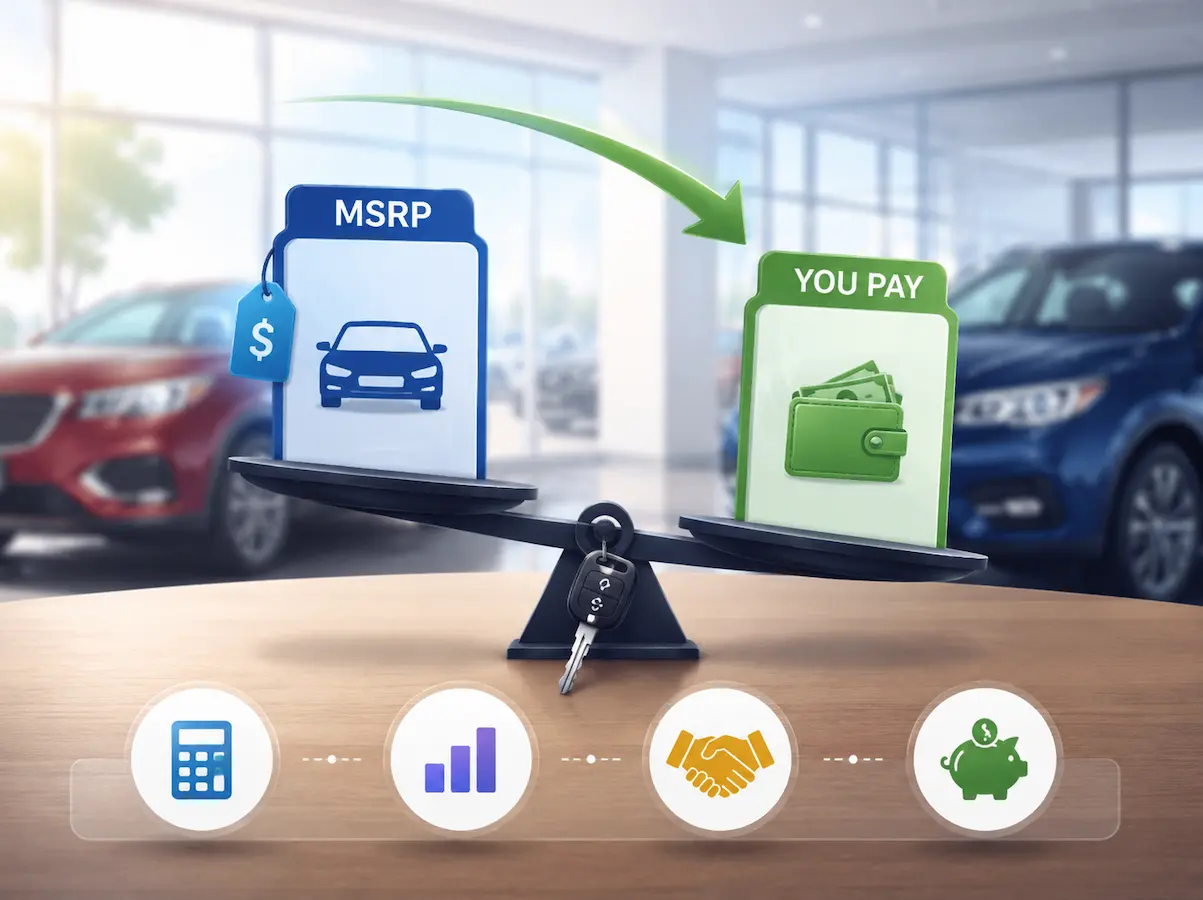
MSRP Meaning Explained

When people shop for a new automobile, electronics, or even a large home appliance, one question often comes up: What price should you expect to pay? Understanding the MSRP meaning helps buyers answer that question and avoid overpaying.

The MSRP is the manufacturer’s recommended price. However, it is not the law or the final price you pay. It is important to understand this number before you agree to buy anything.

What does MSRP means

MSRP stands for Manufacturer’s Suggested Retail Price. It is the price that the manufacturer recommends retailers charge for a product. In the automotive industry, this price is usually printed on the Monroney sticker, which is the label placed on the window of every new car sold in the United States. Because the number appears on the window sticker, many buyers also call it the sticker price.

The MSRP is set by the manufacturer after considering factors like production costs, market competition, features, and the overall brand positioning. For example, companies such as Toyota, Honda, and Ford Motor Company publish an MSRP for every new vehicle model they release. However, the important thing to remember is that the MSRP is not the final price you must pay. It is only a suggested starting point for retailers and dealerships.

A car dealership can sell the product below, at, or above the MSRP depending on demand, inventory levels, and local market conditions. For buyers, knowing the MSRP meaning is helpful because it provides a reference price before negotiations begin. You can also use an MSRP Calculator to estimate pricing differences, discounts, or added costs before visiting a dealership. When shoppers have this information, they can compare offers more easily, evaluate deals, and decide whether the price they are offered is fair.

Which Countries Use MSRP

Which Countries Use MSRP?

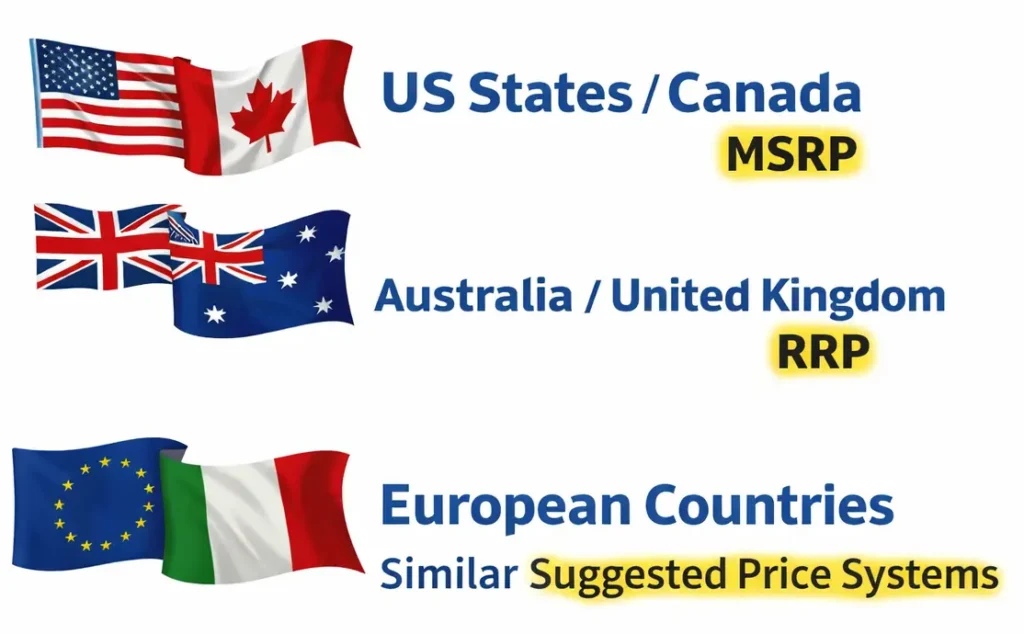
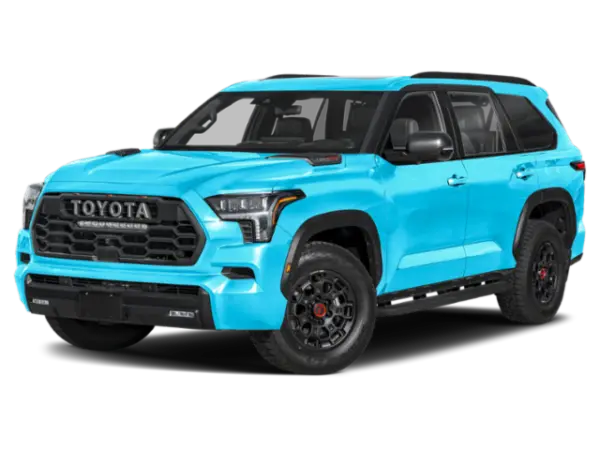
MSRP is mainly used in the United States for products like cars, electronics, Pokémon cards, jewelry, Clothing, Medical Euipment, GPUs, appliances, and other retail items. In the U.S., car brands like Ford Motor Company and Toyota always list the Toyota Sequoia MSRP for new vehicles, and dealers can sell at, below, or above this price depending on demand. Other countries use similar pricing terms, but not always “MSRP.” For example, Canada also uses MSRP, while Australia and the United Kingdom usually use RRP (Recommended Retail Price), and many European countries follow similar suggested price systems.
UK / Australia

RRP

Recommended Retail Price

Europe

SRP

Suggested Retail Price

What Is MSRP Meaning in Cars?

It is the price the car company recommends the dealer sell the vehicle for.

For example, if Toyota Motor Corporation builds a new sedan and sets the MSRP at $30,000, that means Toyota suggests dealers sell it for $30,000. But the dealer does not have to follow that price. They can sell the car:

  • At MSRP
  • Below MSRP (discount)
  • Above MSRP (market adjustment)
What Is MSRP in Cars

Why Is MSRP Important for Buyers?

For car buyers, MSRP is a critical piece of information, but it’s important to understand its components and limitations. It’s not just a single number; it’s a calculated figure that reflects various costs and desired profit margins for the manufacturer.

Who Sets MSRP

The manufacturer of the vehicle sets the MSRP. They factor in the cost of materials, labor, research and development, marketing, and their desired profit margin. This price is then communicated to dealerships.

What is Included

The MSRP typically includes the base price of the vehicle, standard features, and any factory-installed options or packages. It also includes the destination charge, which is the cost of transporting the vehicle from the factory to the dealership. This charge is non-negotiable and is the same for all buyers of that specific model, regardless of their proximity to the factory.

What is Not Included

Crucially, MSRP does not include taxes, registration fees, title fees, or any additional dealer-installed accessories or services (like extended warranties, paint protection, or nitrogen-filled tires). The total cost you pay may rise dramatically as a result of these extra expenses. It’s important to differentiate between manufacturer-installed options (included in MSRP) and dealer-installed options (added by the dealership, often with significant markups).

Window Sticker Explanation (Monroney Sticker)

Every new car in the U.S. comes with a Monroney sticker, also called a window sticker. This sticker shows the MSRP, features, fuel economy, and destination charges. If you want a complete breakdown, read our full guide on monroney sticker definition.

Why Selling Price Changes

The actual selling price of a car can vary significantly from its MSRP due to several factors: dealer discounts, incentives from the manufacturer, market demand, regional pricing differences, and negotiation. A car in high demand might sell for MSRP or even above, while a less popular model might be discounted heavily.

Understanding the Components of a Car’s Price

To be a savvy car buyer, it’s crucial to understand the different pricing terms you’ll encounter. The MSRP is merely a single component. Here’s a breakdown of the key pricing components:

Base Price

The cost of the vehicle with only standard features and no optional add-ons.

MSRP Meaning

The manufacturer’s recommended price, including the base price and standard features.

Invoice Price

The price the dealership pays the manufacturer for the vehicle. This is typically lower than the MSRP.

Destination Fee

A non-negotiable fee charged for transporting the vehicle from the factory to the dealership. This is not always included in the MSRP.

Market Adjustment

An extra charge dealers may add to the MSRP due to high demand or limited availability.

MSRP vs Invoice Price: Key Differences

Understanding the distinction between MSRP and invoice price is paramount for any savvy buyer, especially when negotiating the purchase of a new vehicle. These two figures represent vastly different aspects of a product’s cost and are crucial for determining a fair transaction price.

MSRP

As discussed, this is the price the manufacturer recommends the retailer sell the product for to the end consumer. It’s the public-facing price, designed to be a benchmark for value and comparison. It includes the manufacturer’s desired profit margin, R&D, marketing, and other overheads.

Invoice Price

The invoice price, often referred to as the dealer cost, is the price that the dealership pays the manufacturer for the vehicle. It’s important to note that this is not necessarily the dealer’s actual cost, as dealerships often receive holdbacks, incentives, and other allowances from the manufacturer that can reduce their effective cost even further. However, the invoice price serves as a much closer approximation of what the dealer paid compared to the MSRP.

Key Differences:

Definition

Recommended selling price for consumers

Price the dealer pays the manufacturer

Transparency

Publicly available, often on window sticker

Generally not public, but can be researched by consumers

Purpose

Consumer benchmark, brand positioning

Dealer acquisition cost, basis for profit calculation

Profit Margin

Includes manufacturer’s profit

Reflects dealer’s cost before their profit margin is added

Negotiation

Starting point for negotiation

Often considered the floor for negotiation, though dealers can sell below

MSRP vs. Sticker Price: Are They the Same?

Many people use the terms “MSRP” and “sticker price” to mean the same thing. This is because the sticker price is the price shown on a new car’s window. By law, this sticker must show the MSRP.

However, there is a small but important difference. The sticker price can sometimes be higher than the MSRP. The MSRP covers the basic car and factory parts. The window sticker may also list these extra costs:

  • Destination Charges: The cost of transporting the car from the factory to the dealer. It is often a separate cost and not part of the basic MSRP.
  • Dealer-Installed Options: Items the dealer adds, such as floor mats or security systems. The dealer adds these costs to the total price on the sticker.
  • Market Adjustments: Dealers may add extra charges if a car is very popular. This makes the total sticker price higher.

MSRP is the main part of the sticker price. However, the sticker price can be higher because of these extra fees. You should always check the window sticker closely. This helps you understand exactly what you are paying for.

MSRP Meaning

Base vehicle + factory options

Main recommended price

Sticker Price

MSRP+ dealer add-ons + adjustments

Can be higher than MSRP

MSRP vs. Sticker Price
MSRP vs. Sticker

Is List Price the Same as MSRP?

MSRP and List Price are often used in selling products, but they are not exactly the same. Here is a simple explanation.

MSRP (Manufacturer’s Suggested Retail Price)

  • MSRP is the price that the manufacturer recommends a retailer should charge.
  • It is common in industries like cars, electronics, and appliances.
  • For cars, MSRP is printed on the window sticker.
  • Dealers can sell above or below MSRP.

Example:

A car manufacturer sets the MSRP at $30,000.
A dealer may sell it for $28,500 after discounts.

List Price

  • List Price is the price shown by the seller or store.
  • It is the price listed in a catalog, website, or store tag.
  • It may be set by the retailer, not always by the manufacturer.
  • Discounts are usually applied to the list price.

Example:

An online store lists a laptop with a list price of $1,000.
During a sale, the store sells it for $850.

Key Difference

FeatureMSRPList Price
Who sets itManufacturerSeller or retailer
Common useCars, electronicsAny product
PurposeSuggested selling priceDisplayed selling price

Why Dealers Charge Above MSRP

Dealers usually sell cars at the Manufacturer’s Suggested Retail Price (MSRP). This is the price the car maker recommends. However, sometimes dealers charge more. This extra cost is often called a “market adjustment.”

Here are the main reasons why this happens:

Low Supply and High Demand: When a car is popular but production is limited, demand exceeds supply. Dealers may raise prices knowing buyers are willing to pay more to get it first.

Limited Edition Models: Rare or special edition cars often sell above MSRP because collectors or fans are willing to pay a premium.

Can You Negotiate MSRP?

Yes, in most cases. The MSRP is a suggested price, and dealers expect negotiation. Your ability depends on market conditions, dealer inventory, timing, and research. Some situations, like rare or high-demand models, make negotiation difficult, and you may need to pay MSRP or more.

frequently asked questions

MSRP stands for Manufacturer’s Suggested Retail Price.

Whether buying at MSRP is a “good” deal depends entirely on the current market supply and the type of product you are buying. In a perfect world, you want to pay below MSRP, but that isn’t always possible—or even a bad thing.

No, it is not illegal in the United States. MSRP is a suggested price, and dealers are free to set their own prices based on market demand.

Yes, the destination charge is included in the official MSRP listed on the vehicle’s Monroney sticker.

You can find the invoice price through various online car-buying resources like Consumer Reports, Edmunds, and KBB. This information is crucial for effective negotiation.

No. Dealer add-ons (like paint protection or window tinting) are added by the dealership and are separate from the manufacturer’s suggested price. They are often highly marked up and negotiable.

No, not all products have an MSRP. It is most common for big-ticket items like cars, electronics, and appliances, where price consistency and brand image are important.

A dealer holdback is a percentage of the MSRP (usually 1-3%) that the manufacturer pays back to the dealer after the car is sold. It’s another part of the dealer’s profit that isn’t reflected in the invoice price.

A fair price is typically somewhere between the invoice price and the MSRP. A good starting point for negotiations is to offer a price slightly above the invoice price.

Final Thoughts

Understanding the MSRP meaning can help buyers make smarter decisions before purchasing a product. The Manufacturer’s Suggested Retail Price gives shoppers a clear starting point when comparing prices for items like a new automobile, electronics, or major home appliance. It shows the price recommended by the manufacturer, but it does not always represent the final amount you will pay.

In many cases, retailers or a car dealership may offer discounts, incentives, or seasonal promotions that bring the price below the suggested amount. At the same time, high demand or limited inventory can sometimes push the selling price above the suggested level.

For this reason, understanding the MSRP meaning helps you evaluate deals more confidently and compare different offers before making a purchase. When buyers know how this pricing system works, they are better prepared to negotiate and choose a product that fits both their needs and their budget.

Get in touch with us if you have questions.